Joe "Big House" Kenn · October 21, 2026 · 10 min read
NCAA Strength Coach Rule Change: Are Colleges Missing the Point?
Why the Future of College Strength and Conditioning Depends on Developing Better Coaches, Not Simply Hiring More of Them
By Joe “Big House” Kenn
The NCAA has once again made a significant change affecting college football, and this time the decision directly impacts the strength and conditioning profession. The removal of the five-strength-coach limitation in FBS football opens the door for universities to expand their strength and conditioning staffs. On the surface, this appears to be a tremendous opportunity for our profession. More positions, more opportunities, and potentially more resources dedicated to preparing student-athletes for success.
But I have a question. Are we going to use this opportunity to develop better strength coaches, or are we simply going to hire more people? After 40 years in the coaching profession, including opportunities at the collegiate and professional levels, I believe we are at an important crossroads. This decision provides athletic departments with an opportunity to address something that has concerned me for years: the declining emphasis on practical coaching experience, professional mentorship, and the development of young strength and conditioning coaches.
The NCAA has opened a door. What we do with that opportunity is now up to us.
How did we get here?
To understand why this decision matters, we need to understand how the five-strength-coach rule originated. During the early 2000s, college football programs operated under limitations regarding the number of football coaches permitted to work directly with athletes. According to what I witnessed and understood during that period, some programs found creative ways to expand their football coaching personnel by placing individuals within their strength and conditioning departments.
These individuals were officially associated with strength and conditioning but were reportedly being utilized to assist with football coaching responsibilities. The NCAA eventually responded by limiting the number of strength and conditioning coaches permitted to work with Division I football programs. The five-strength-coach limitation became part of the professional environment for approximately two decades. Now, following a legal challenge involving the restriction, the NCAA has moved away from that limitation. I give tremendous credit to the coach who challenged the rule and helped create this opportunity for the profession.
However, my concern is not whether the rule should have changed. My concern is how universities will respond to the additional staffing flexibility.
The mising link: graduate assistant programs
When I began building my career in strength and conditioning, the graduate assistant position was one of the most valuable opportunities available to an aspiring coach. The traditional model was relatively straightforward. A young coach could enter a graduate program, receive tuition assistance and a stipend, and spend approximately two years developing practical experience within a collegiate strength and conditioning department. That combination was extremely valuable.
You were earning your master's degree while learning how to coach. You were gaining practical experience, developing relationships, observing experienced professionals, and building the credentials necessary to compete for future full-time positions. At that time, many assistant strength and conditioning positions required a master's degree and two years of experience. The graduate assistant model allowed a young coach to satisfy both expectations while receiving financial support.
It was a tremendous professional development opportunity. As college football programs expanded their financial resources and increased the number of full-time strength and conditioning positions, many traditional graduate assistant opportunities began disappearing, particularly at the highest levels of college football. I believe that loss has created a significant challenge for the next generation of coaches.
The difficult decision facing young strength coaches
Today's aspiring strength and conditioning professionals often face a decision that previous generations did not have to navigate in quite the same way. Do they continue their education and pursue a master's degree, or do they prioritize gaining practical coaching experience through internships? Ideally, they should be able to accomplish both. Unfortunately, many young coaches are being forced to choose. Academic advisors understandably emphasize the importance of graduate education. I strongly support education, and I believe continuing to develop your knowledge is an important part of becoming a successful professional.
However, there is a difference between studying coaching and actually coaching. You can study exercise physiology, biomechanics, program design, and performance analytics. You can complete advanced degrees and obtain professional certifications. All of those experiences have value. But you cannot replace the experience of standing on the weight room floor and learning how to coach athletes. You have to learn how to communicate, teach, observe, correct, motivate, and build relationships. You need to understand how different athletes respond to instruction and how to adjust your coaching approach to the individual standing in front of you.
Those skills develop through experience. The challenge becomes even greater when young coaches are expected to complete unpaid internships while simultaneously financing graduate education and managing their personal expenses. We should not be creating professional development environments that make it unnecessarily difficult for talented young people to enter our profession. We should be creating opportunities that allow them to succeed.
Are we undervaluing division II and division III coaching experience?
Another issue that concerns me is how coaching experience is evaluated throughout the profession. Some aspiring coaches recognize the value of graduate assistant opportunities at Division II and Division III institutions. These positions may provide tuition assistance, practical experience, and opportunities to coach multiple sports. From my perspective, these can be outstanding environments for developing coaching skills. At many smaller institutions, coaches must become extremely proficient at teaching movement, adapting training programs, managing limited resources, and working with athletes across numerous sports.
There is tremendous professional value in those experiences. Yet some young coaches face another obstacle when attempting to advance their careers. Their experience becomes defined by the competitive classification of the institution rather than the quality of the coaching they have performed. A coach who has developed tremendous practical skills at a Division II or Division III institution should not automatically be viewed as less capable of coaching at the Division I level.
We need to evaluate coaching ability, not simply the logo on someone's résumé. The goal should be identifying individuals who can teach, communicate, develop athletes, and contribute to a successful performance environment. Those qualities are not exclusive to any particular competitive division.
More specialists, not more hybrid job titles
As college athletic departments continue to expand their performance staffs, I believe another important discussion needs to take place. We must become more deliberate about defining professional responsibilities. Strength and conditioning, sports science, performance nutrition, mental performance, and other specialized disciplines all contribute to athlete development. Each discipline provides valuable expertise. However, I am concerned about the growing tendency to create hybrid positions that attempt to combine multiple professional responsibilities into a single job description.
At the highest levels of performance, we should be working toward developing greater expertise within each discipline. If you want to become an outstanding strength and conditioning coach, commit to developing the knowledge, skills, and experience necessary to become an outstanding strength and conditioning coach. If your professional interest is sports science, performance analytics, nutrition, or mental performance, pursue excellence in that discipline. There is tremendous value in collaboration, but collaboration does not require every professional to perform every responsibility.
The best performance environments bring together individuals with different areas of expertise who work collectively to serve the athlete. Specialization should strengthen collaboration, not create professional competition. As resources increase, we have an opportunity to build performance staffs that provide greater levels of expertise while maintaining clearly defined responsibilities. That is how we continue improving the environment surrounding the athlete.
The Profession Needs Coaches Who Can Coach
One of my greatest concerns about the direction of strength and conditioning is the increasing emphasis on academic credentials, technology, and data collection without an equal commitment to developing practical coaching ability. Let me be clear. I believe in education, research, sports science, and technology. I also believe that none of those things replace coaching. We can collect tremendous amounts of performance data. We can measure velocity, power output, movement characteristics, and countless other variables.
But those numbers are only valuable when we use them to improve the athlete's training experience. The athlete is not simply a collection of numbers. The athlete is a person. Our responsibility is to understand that person, develop relationships, communicate expectations, teach movement, and create an environment where the athlete has the opportunity to improve. Coaching requires personal interaction. It requires the ability to recognize when an athlete needs instruction, encouragement, correction, or simply someone willing to listen.
Those skills cannot be fully developed through a computer screen, online lecture, or textbook. You have to be present. You have to interact with athletes. You have to learn how to coach. We should never confuse the ability to design a training program with the ability to successfully coach that program. They are connected, but they are not the same thing.
What I Would Do With the Additional Staffing Opportunities
If I were currently leading a major college football strength and conditioning program and my athletic director approached me about expanding our staff, my recommendation would be straightforward. Invest in graduate assistants. Rather than immediately adding several additional full-time positions, I would work toward developing a comprehensive graduate assistant program that provides meaningful professional development opportunities. I would want those young coaches to receive graduate education, financial assistance, direct mentorship, and substantial practical coaching experience.
I would also want them to have opportunities to work with athletes beyond the football program. During my time at Arizona State, we worked hard to create a graduate assistant program that provided real value. More than two decades ago, our graduate assistants received a monthly stipend of approximately $1,000 along with tuition and fee support during the academic year and summer coursework opportunities. Our objective was to create an environment where young coaches could develop professionally, complete their graduate education, and prepare themselves for future employment opportunities.
That is the type of investment I believe our profession needs to revisit. The financial details would obviously be different today, but the philosophy remains relevant. We should be investing in programs that provide young coaches with both educational and practical development opportunities. That is a much greater long-term investment than simply increasing the number of people employed within a department.
Why Multi-Sport Coaching Experience Matters
One additional benefit of rebuilding graduate assistant programs is the opportunity to expose young coaches to multiple sports. College football has become increasingly specialized, with many major programs operating their strength and conditioning departments separately from Olympic sports and other athletic programs. While I understand why that structure exists, I believe we lose something valuable when young coaches are exposed to only one sport. Early in a coaching career, working with athletes from different sports provides tremendous educational opportunities.
You learn how to teach different movement patterns, understand different competitive demands, adjust training environments, and communicate with athletes who have different needs and experiences. Those lessons make you a more adaptable coach. Think about how frequently we discuss the benefits of multi-sport participation when evaluating young athletes. Why would we not value similar diversity when developing young coaches? I want strength and conditioning coaches who have experienced different athletic environments and understand how to adapt their coaching methods to the athletes they serve.
Graduate assistant programs could help bridge the separation between football and Olympic sports departments while creating a more collaborative professional environment. The athletes benefit, the young coaches benefit, and the athletic department benefits.
We Must Reevaluate Job Descriptions and Compensation
There is another responsibility that falls directly on those of us in leadership positions. We need to take a serious look at the qualifications, responsibilities, and compensation associated with entry-level strength and conditioning positions. I continue to see job postings that require advanced education, certifications, and multiple years of experience while offering salaries that do not appropriately reflect those expectations. We cannot continue to demand increasingly advanced qualifications without considering the financial realities facing young professionals.
Job titles should accurately represent responsibilities, and compensation should be consistent with the expectations of the position. If you are a head strength and conditioning coach or department director, you have an opportunity to work with your athletic administration and human resources personnel to improve these circumstances. We need to stop creating unnecessary obstacles for the next generation. Our responsibility extends beyond developing athletes. It includes developing the coaches who will eventually take our places.
Leadership Means Investing in the Next Generation
Throughout my career, I have benefited from the knowledge, guidance, and support of numerous coaches and professionals. Some were individuals I worked alongside. Others were experienced coaches whose work influenced my thinking and professional development. I continue to value those relationships today. The opportunities I received helped shape the coach I became, and I believe those of us who have benefited from mentorship have a responsibility to provide similar opportunities to others.
That is what professional leadership should represent. We should not simply be concerned with building the strongest possible staff for the current season. We should also be concerned with preparing the next generation of coaches to lead the profession in the future. That requires intentional investment. It requires mentorship. It requires creating opportunities for young coaches to gain meaningful experience, develop their professional identity, and learn from individuals who have already traveled the path they hope to follow. We need to place greater value on teaching coaches how to coach.
The NCAA Opened the Door. Now What?
The NCAA's decision to remove the five-strength-coach limitation provides college football programs with additional staffing flexibility. I believe that is a positive development. But the true value of this change will be determined by how athletic departments choose to use that flexibility. We can simply hire more people, expand job titles, and continue operating within the same professional development structure. Or we can recognize an opportunity to rebuild something that once provided tremendous value to our profession.
Graduate assistant programs helped develop generations of strength and conditioning coaches by combining education, mentorship, and practical experience. I believe it is time to bring that model back into the conversation. Not because we should return to the past, but because we can take something that worked, improve it, and create better opportunities for the future. The strength and conditioning profession does not simply need more coaches. It needs better opportunities to develop great coaches.
That is where I would invest. That is where I believe we can make the greatest difference. And that is how we help prepare the next generation to succeed.
WORDS WIN!
ABOUT THE AUTHOR
Joe “Big House” Kenn is a veteran strength and conditioning coach with 40 years of coaching experience across high school and collegiate athletics, professional football, and the private performance sector. He is the creator of the Tier System Strength Training Model, The Block Zero Concept, PIVoT (Peak Intent Velocity Training) and hosts Inside the House | Words Win Wednesday, where he shares perspectives on coaching, leadership, athletic development, and lessons learned throughout his career.
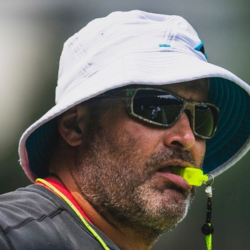
Joe "Big House" Kenn
Strength Coach Network


